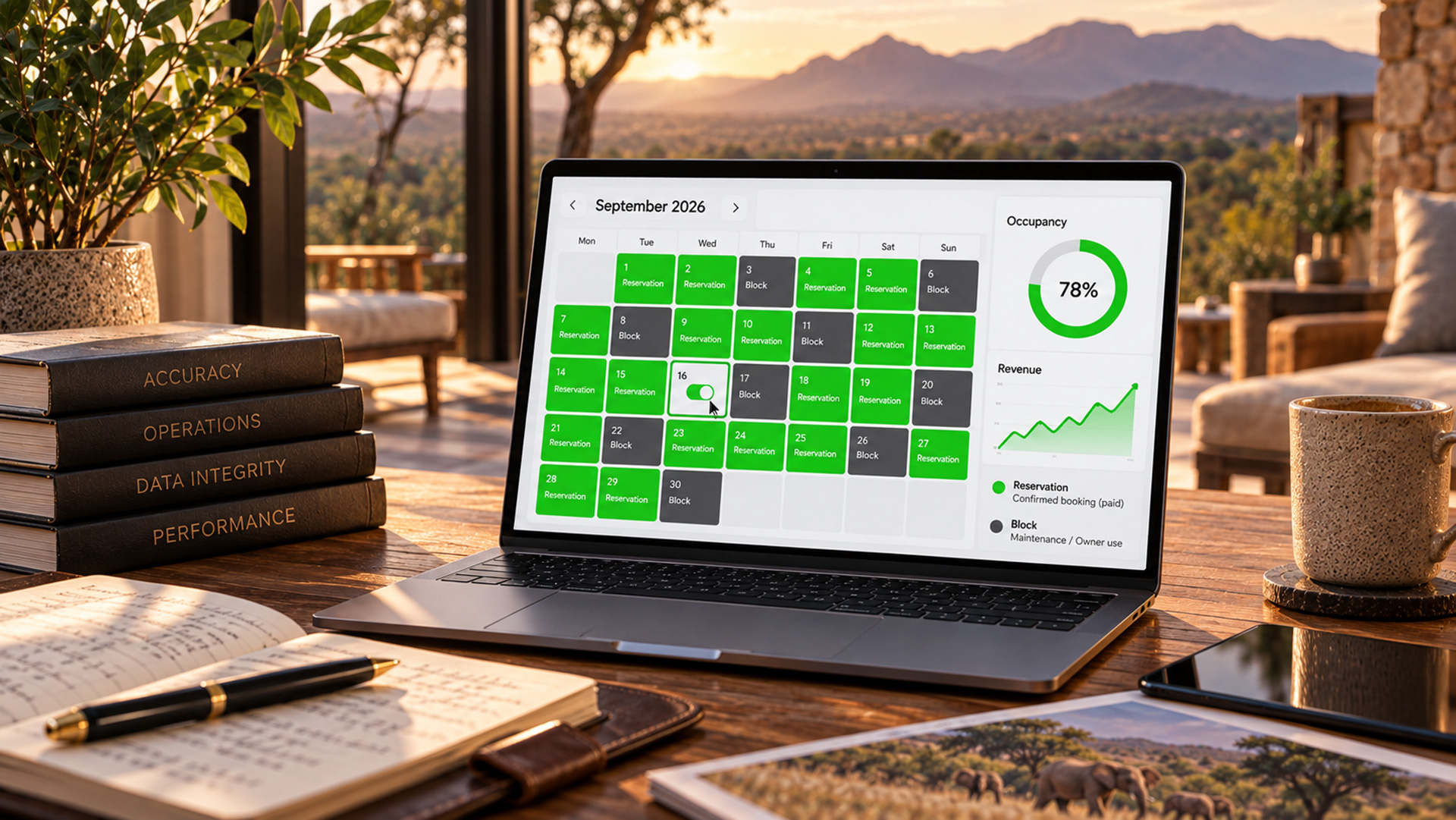
A block and a booking are not the same thing
There are legitimate reasons to block dates.
Maintenance, owner stays and genuine closures are all valid.
But if a guest is paying to stay at the property, that stay should be recorded as a reservation, not a calendar block.
A reservation tells us:
• The property was sold.
• Revenue was generated.
• These dates represent paid occupancy.
A block tells the system:
• The property was unavailable.
And that distinction can influence more than reporting.
Dynamic pricing is constantly trying to balance occupancy and revenue across the remaining available inventory.
When nights are blocked, those nights are removed from the sellable calendar.
That can change the occupancy picture and place greater pressure on the remaining available nights to convert.
Depending on the availability pattern, pricing may respond by making those remaining dates more attractive in an effort to maximise paid occupancy and revenue.
An innocent block does not always remain isolated to that one date. It can influence how the remaining calendar is interpreted and priced.
That is why unnecessary blocks can have a knock-on effect.
Recording paid stays as blocks can also distort:
• Occupancy
• Revenue reporting
• Average Daily Rate
• Performance analysis
• Payment reconciliation
• Future pricing decisions
Good pricing relies on good information.
If it is a genuine block, record a block.
If it is a booking, record a booking.
If money changed hands, record the revenue.
Accurate data gives us a clearer picture of the property and allows the strategy to work from reality rather than incomplete information.
Why paid direct bookings still need to be reservations
A direct booking is still a booking.
Whether the guest came through Airbnb, Booking.com, your own website, a repeat guest, a referral or a direct enquiry, a paid stay represents real occupancy and real revenue.
If that stay is entered as a block instead of a reservation, the system cannot distinguish it from maintenance, an owner stay or a genuine closure.
That means the property may look unavailable when it was actually sold.
If the property earned revenue from the night, the performance data should show it.
The more accurate the calendar and revenue information, the better the decisions we can make around pricing, availability, performance and future strategy.

The knock-on effect of unnecessary restrictions
Blocking one date may feel like an isolated action, but pricing systems do not look at dates in isolation.
They look at the shape of the remaining calendar.
Removing sellable nights changes what remains available, how occupied the calendar appears and where pricing opportunities may exist.
That does not mean every block automatically changes the price of another night. It means unnecessary blocks can change the information the strategy is working from.
Good strategy depends on good data. The calendar needs to reflect what actually happened.
The takeaway
Use blocks when the property is genuinely unavailable.
Use reservations when a guest is staying and money has changed hands.
Keeping those two things separate protects the accuracy of your occupancy, revenue and performance information and gives pricing strategy the clearest possible picture to work from.
A block means unavailable.
A booking means sold.
If money changed hands, record the revenue.